

остров Шолта is the closest island to Split — 9 nautical miles, a Jadrolinija car ferry ride of about an hour or a catamaran hop of around 30 minutes from Rogač, its only real port — and the quietest of the main options. No big resorts, no cruise-ship crowds, no strip of bars. Just olive groves, stone villages, a scattering of coves, and a slower pace that Brač, Hvar and Vis gave up years ago. If you want a quiet island with a slow pace, Šolta is a good choice.
Чем Шолта отличается от других островов?
Оглавление
- 1 Чем Шолта отличается от других островов?
- 2 Как добраться до Шолты из Сплита
- 3 Деревни: Рогач, Маслиница, Грохоте, Стоморска и Нечуям.
- 4 Пляжи и бухты, которые стоит посетить.
- 5 Оливковое масло, мед и вино — то, что производит Шолта на самом деле.
- 6 Чем заняться на Шолте помимо пляжа?
- 7 Однодневная поездка или ночевка на Шолте
- 8 Кому на самом деле подходит Шолта
- 9 Часто задаваемые вопросы
- 9.1 Как добраться из Сплита в Шолту?
- 9.2 Какова продолжительность поездки на пароме из Сплита в Шолту?
- 9.3 Стоит ли посещать Шолту по сравнению с Хваром или Брачем?
- 9.4 Можно ли посетить Шолту в рамках однодневной поездки из Сплита?
- 9.5 Где лучше остановиться на Шолте?
- 9.6 Чем известна Шолта?
- 9.7 В Шолте хорошие пляжи?
- 9.8 Подходит ли Шолта для семейного отдыха?
- 9.9 Связанные руководства
- 10 Источники и дополнительная литература
Most first-time visitors default to Hvar or Brač because those names show up first in the search results. Šolta rarely does, which is exactly the point. It’s smaller (about 19 km long, 5 km wide), and its five main villages — Rogač, Maslinica, Stomorska, Nečujam and Grohote — between them hold a few thousand residents who mostly know each other. There’s no Hvar-style nightlife, no Zlatni Rat-style crowd magnet (Zlatni Rat is the famous long pebble beach near Bol on Brač island). What Šolta has instead is silence, good olive oil, a genuinely excellent bay-hopping coastline, and a 30-to-60-minute journey time that makes it the easiest day trip to a quiet, real island from Split there is.
Как добраться до Шолты из Сплита
Каждый маршрут к Шолта Хорватия lands at Rogač, the island’s only ferry port. From there it’s a short drive or scheduled bus to Maslinica, Grohote, Stomorska or Nečujam. Rogač has two small beaches within a 10–15 minute walk, useful if you have an hour to wait.
Существует три реалистичных способа совершить переправу, в зависимости от того, едете ли вы на машине и предпочитаете ли вы фиксированное общественное расписание или свой собственный график.
- Автомобильный паром Ядролиния (линия 636): the main service all year. Split–Rogač takes around 60 minutes, multiple sailings daily. A ticket also functions as your reservation — book ahead in July and August with a vehicle.
- Катамаран Krilo (только для пеших пассажиров): Скоростной пассажирский поезд до Рогача, примерно 30 минут в пути, обычно один раз в день, с большей частотой в разгар лета. Движение автотранспорта запрещено.
- Частная лодка из Сплита в Шолту: наш Паром-такси из Сплита в Шолту Этот рейс преодолевает то же расстояние в 9 морских миль примерно за 30 минут, в удобное для вас время, с причалом прямо в марине Маслиницы, к вилле или в любом другом месте вашего проживания — не только в Рогаче. Цена за весь катер в 2026 году составляет 250–450 евро.
| Вариант | Оператор | Время пересечения | Примерная цена | Лучше всего подходит для |
|---|---|---|---|---|
| Автомобильный паром | Jadrolinija (строка 636) | ~60 мин | Взрослый билет: от ~5,70 евро; автомобиль: от ~23,50 евро в одну сторону (уточните актуальное расписание). | Можно взять с собой автомобиль или скутер, а также путешествовать неспешно и с гибким графиком. |
| Катамаран | Судоходная компания Крило | ~30 мин | От ~4,25 до 6,60 евро в одну сторону, только для пеших пассажиров (уточните актуальное расписание). | Пешие пассажиры, туристы, наблюдающие за часами. |
| Частное водное такси | Далматинский экспресс | Примерно 30 минут, от двери до двери. | 250–450 евро за всю лодку | Круглосуточно, по вашему расписанию, рейсы отменяются, если катамараны отменяются, возможен трансфер из аэропорта Сплита.прибытие прямо в порт, наличие багажа или задержка рейса. |
Хотите самый простой способ переправы в Шолту? Забронируйте водное такси из Сплита в Шолту..
Шолта — самый дешевый вариант переправы между островами из Сплита на регулярном судне, поэтому честное сравнение имеет значение: чтобы узнать, сколько стоит частная лодка на каждом маршруте из Сплита — и где паром или катамаран действительно выигрывают по цене — смотрите наш Цены на водные такси из Сплита в 2026 годуЧтобы сравнить Шолту с более оживленными островами, мы составили для них рейтинг. 9 лучших островов для посещения из Сплита.
Цены и количество рейсов меняются в зависимости от сезона, поэтому приведенные выше цифры следует рассматривать только как ориентировочные, поскольку цены и расписание могут меняться — перед бронированием, особенно если вы путешествуете на автомобиле в разгар лета, проверьте актуальное расписание на сайтах jadrolinija.hr или ksc.hr. Предпочитаете не следить за расписанием? Свяжитесь с нами Укажите даты, и мы рассчитаем стоимость частного переправы прямо к вашему причалу.
Совет от капитана: Катамаран компании Krilo, курсирующий до Рогача, действительно имеет ограниченное количество рейсов — зачастую всего один рейс в день даже в высокий сезон, в отличие от маршрута Сплит–Хвар, который ходит почти каждый час. Если ваш план однодневной поездки зависит от конкретного времени возвращения, подтвердите этот единственный рейс до отъезда из отеля, а не после того, как вы его пропустили. Частный переправа полностью исключает этот риск, поскольку мы отправляемся тогда, когда вы готовы, а не по расписанию Krilo.
Деревни: Рогач, Маслиница, Грохоте, Стоморска и Нечуям.
В Шолте есть пять населенных пунктов, заслуживающих внимания, и каждый из них выполняет свою функцию.
Рогач is the arrival point, not the destination — a working ferry harbour with a couple of konobas and two nearby beaches, good for a short wait, but not a place to stay.
Маслиница, on the west coast, is the most beautiful village: stone houses around a deep, sheltered bay, framed by an archipelago of seven small islets. Its landmark is the Martinis Marchi castle, built in 1708 by the Marchi family and now a heritage hotel with its own award-winning marina — around 50 berths inside, plus outer moorings for superyachts. Maslinica also has the island’s best small beaches and restaurants, which is why it’s the usual answer to “where should I stay on Šolta.”
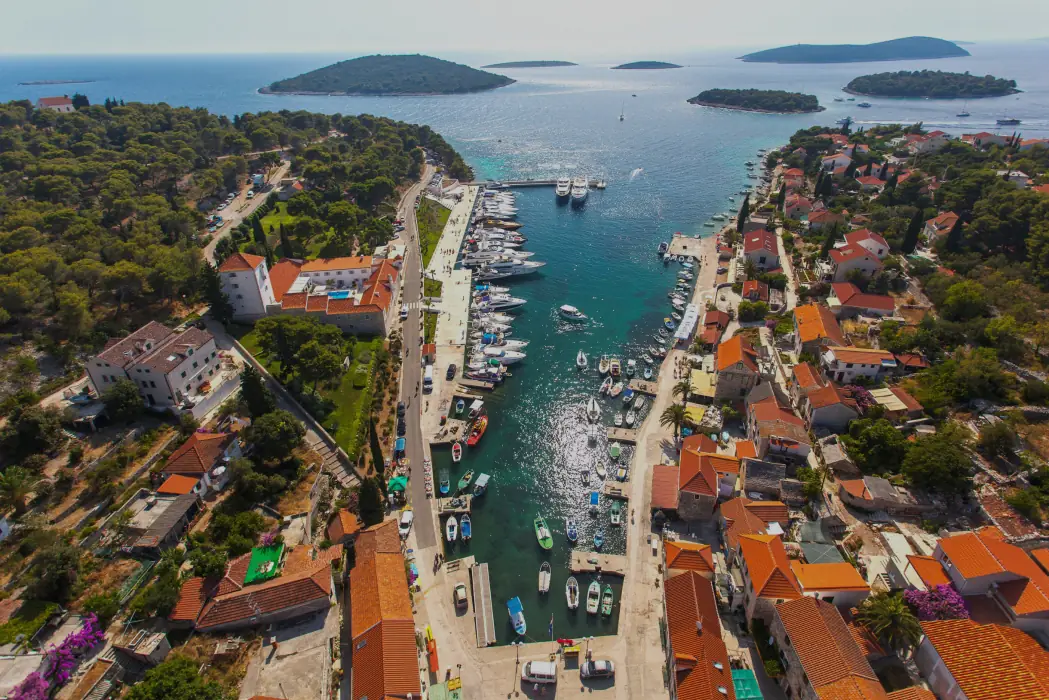
ГрохотеРасположенный в глубине острова, всего в 1,5 км от Рогача, находится старейший и крупнейший населенный пункт и административный центр острова — ратуша, клиника, почтовое отделение, аптека и полицейский участок, а также церковь Святого Стефана и небольшие галереи наивного искусства. Это не приморская деревня; это место, где вы чувствуете, что остров действительно функционирует.
СтоморскаРасположенный на восточном побережье, этот город является одним из старейших рыбацких портов Шолты и в настоящее время самым оживленным небольшим портом города — здесь есть рестораны, рынок, места для проживания, яхты приходят и уходят весь день. Из всех пяти портов он больше всего отличается атмосферой «портового города», с пляжами по обеим сторонам деревни.
НечуямШирокая, защищенная бухта на севере, пожалуй, является лучшим местом для отдыха во всех отношениях: галечные пляжи, апартаменты и восемь небольших бухт вокруг главной бухты, включая Пишкеру, известную в округе своей грязью. Она идеально подходит для семей, желающих иметь удобное место отдыха с пляжем в нескольких минутах ходьбы.
Пляжи и бухты, которые стоит посетить.
Береговая линия Шолты простирается почти на 80 км, если учитывать все бухты — это один из немногих хорватских островов, где даже в августе можно найти уединенную бухту.
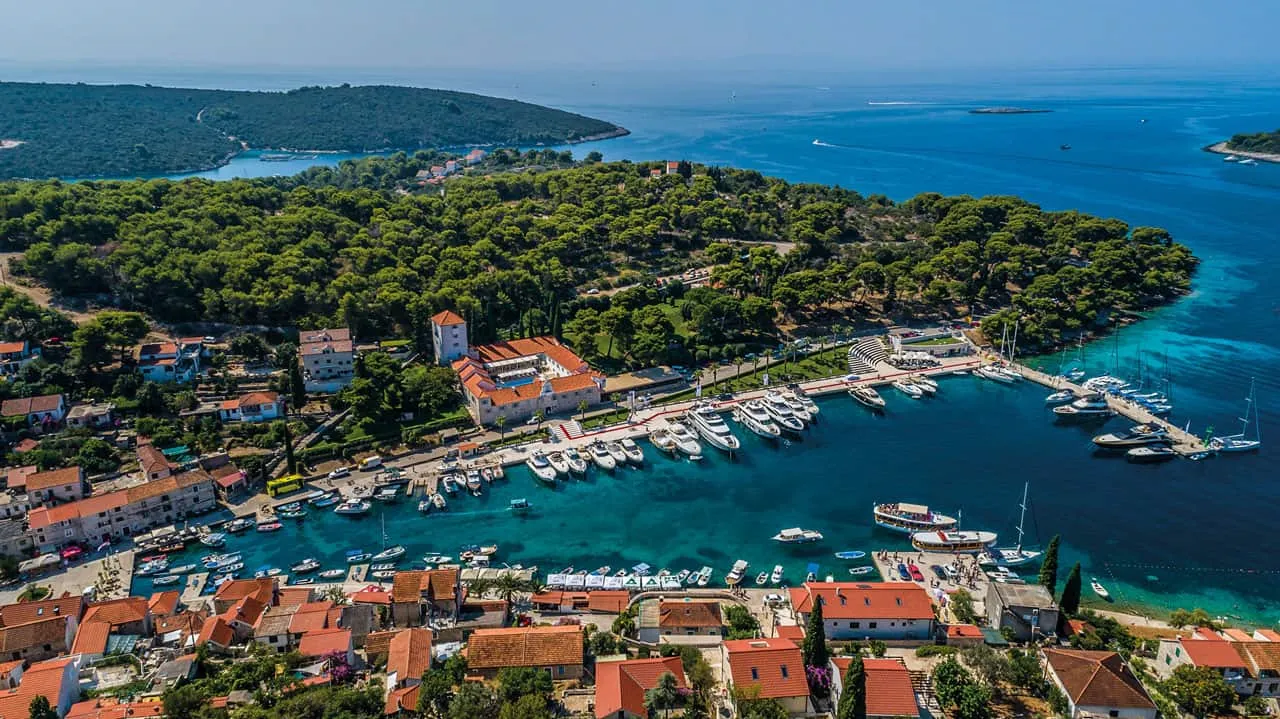
- Бухты залива Нечуям — Всего восемь мест, до которых можно добраться пешком, на велосипеде или на лодке (недолго).
- Шешула, недалеко от Маслиницы — излюбленное место моряков, защищенное как от буры (сильного северо-восточного ветра), так и от юго (юго).
- Залив ТатиньяНедалеко от Грохоте находятся небольшие галечные бухты, известные своими прыжками со скал.
- Бухта Шипкова — единственный на острове по-настоящему песчаный пляж, и самый фотографируемый.
- Вели Долац Стоморской — Обстановка, подходящая для пляжного бара, а не для полной изоляции.
До большинства лучших бухт проще всего добраться по воде, а не по извилистой прибрежной дороге — это стоит учесть, если в ваши планы уже включена аренда частной лодки.
Оливковое масло, мед и вино — то, что производит Шолта на самом деле.
Šolta is a small island, but it makes very good food and drink. Its olive oil — Šoltansko maslinovo ulje — carries EU Protected Designation of Origin status. Its wild rosemary honey has a distinctive bronze colour and a following well beyond Dalmatia. And its vineyards grow Dobričić, a red grape variety that survives almost nowhere else — the historic parent grape of Plavac Mali, the backbone red of Hvar and Pelješac wine. If you bring home one thing, make it oil or honey from a village konoba rather than a supermarket in Split.
Совет от капитана: Пропустите ориентированный на туристов магазин в яхтенной пристани Маслиницы и спросите в конобе в Гроготе или Стоморске, продают ли они масло или мед напрямую от местного производителя — обычно это на несколько евро дешевле, и вы покупаете напрямую у семьи, которая это произвела, что важно на острове такого размера.
Чем заняться на Шолте помимо пляжа?
Šolta is best for people who like being outside more than people who like itineraries. Hikers can climb to Vela Straža, the island’s highest point at 237 m, for a view back across the channel to Split. Cyclists have quiet inland lanes between Grohote, Gornje Selo and the coast. Kayakers and swimmers can work the Nečujam coves at their own pace. Sailors use Šolta as a first or last stop on charters precisely because Maslinica’s marina and Šešula bay are among the best-sheltered anchorages around. For a proper excursion rather than a self-guided wander, the Экскурсия в Голубую пещеру, Бишево. departs from the Split side and combines easily with a Šolta stop by private boat. For history, Grohote’s St Stephen’s Church and naive-art galleries are worth an hour, and the Gornje Selo walking tour takes in the 19th-century Church of St John the Baptist and a very rural side of the island most day-trippers never see.
Однодневная поездка или ночевка на Шолте
Поскольку Рогач находится всего в 30–60 минутах от Сплита, Шолта — один из самых простых для однодневной поездки настоящих островов: достаточно сесть на ранний парусник или отправиться в путешествие на пароме. частная лодка над, spend the day between Maslinica and Nečujam or Stomorska, and be back in Split for dinner — swim, eat, wander a village, come home relaxed, not tired.
An overnight or two changes the experience, though. Šolta after the last ferry leaves is a very different island — quiet harbours, empty coves at sunset, no day-trip traffic. Maslinica has the island’s best hotel (Martinis Marchi, inside the old castle) plus smaller guesthouses and apartments; Nečujam and Stomorska both have simpler apartment-style stays suiting families wanting a longer, slower base. If your trip already includes Hvar, Brač or Vis, Šolta works well as a one- or two-night detour — see our Лучшие острова недалеко от Сплита, рейтинг.или сравните его напрямую с Сплит в Хвар Если эти два варианта входят в ваш список, то это будет кросс.
Передвигаться по острову легко, но не быстро: вдоль его хребта тянется одна главная дорога, а автобусы соединяют деревни по ограниченному расписанию. Аренда автомобиля или скутера имеет смысл для поездок более чем в одну деревню в день.
Время в пути Сплит → Шолта
Кому на самом деле подходит Шолта
Шолта подходит не всем. Она идеально подходит для семей с маленькими детьми, которые хотят спокойной воды и небольшого расстояния между пляжем, местом для обеда и машиной — Нечуям в этом плане особенно хорош. Она подойдет парам и тем, кто ищет тишины и покоя, но уже повидал ночную жизнь Хвара и хочет чего-то противоположного, а также яхтсменам, которые знают Маслиницу и Шешулу как уединенные места отдыха, а не туристические центры. Она не подойдет тем, кто гонится за пляжными клубами или ночной жизнью — для этого лучше подойдут город Хвар или Бол на Браче. Если же вам важна тишина, а не компромисс, Шолта обеспечит ее лучше, чем любой другой остров так близко к Сплиту.
Не знаете, какой остров лучше всего подойдет для вашей поездки? Напишите команде Укажите даты и количество человек в вашей группе, и мы честно скажем, какой из городов — Шолта, Брач или Хвар — вам больше подходит, и рассчитаем стоимость частного трансфера.
Часто задаваемые вопросы
Как добраться из Сплита в Шолту?
На пароме Jadrolinija (около часа, разрешено движение автомобилей), катамаране Krilo (около 30 минут, только для пеших пассажиров, количество рейсов ограничено) или частном водном такси (около 30 минут, расписание по вашему выбору, стоимость всего судна €250–450). Все общественные паромы причаливают в Рогаче.
Какова продолжительность поездки на пароме из Сплита в Шолту?
Поездка на автомобильном пароме Jadrolinija занимает около 60 минут. Катамаран Krilo быстрее, около 30 минут, только для пеших пассажиров. Переправа на частном катере также занимает около 30 минут и может отправляться из любого удобного для вас места в Сплите, а не только с паромного терминала.
Стоит ли посещать Шолту по сравнению с Хваром или Брачем?
Все зависит от ваших предпочтений. Шолта тише, меньше и менее развита, чем оба этих места — здесь нет ночной жизни и больших пляжных клубов. Если вас привлекает именно это, то оно действительно того стоит. Если же вам нужны оживленные бары или знаменитый пляж, как Златни-Рат, то вам больше подойдут Хвар или Брач.
Можно ли посетить Шолту в рамках однодневной поездки из Сплита?
Да, безусловно — это ближайший к Сплиту остров, до которого можно добраться примерно за 30–60 минут в одну сторону. Многие туристы совмещают утренний паром с обратным рейсом во второй половине дня, проводя день в Маслинице или Нечуяме.
Где лучше остановиться на Шолте?
В Маслинице находится лучший отель на острове, расположенный в историческом замке Мартинис Марки, а также самые красивые места и лучшие рестораны. Нечуям подойдет семьям, желающим отдохнуть в более спокойной бухте. Стоморска подойдет тем, кто ищет оживленный порт с возможностью неспешных вечерних прогулок.
Чем известна Шолта?
Оливковое масло со статусом защищенного наименования места происхождения ЕС, мед из дикого розмарина, редкий красный виноград Добричич и поистине нетронутое побережье с тихими бухтами — плюс замок и пристань для яхт Мартинис Марки в Маслинице.
В Шолте хорошие пляжи?
Да, хотя до большинства из них нужно немного потрудиться, чтобы добраться: восемь бухт вокруг залива Нечуям, Шешула недалеко от Маслиницы, бухта Татинья недалеко от Грохоте и Шипкова, единственный песчаный пляж острова. На Рогаче есть два простых пляжа недалеко от паромного порта.
Подходит ли Шолта для семейного отдыха?
Да — зачастую здесь проще, чем на Хваре или Браче, именно потому, что здесь тише и меньше разбросано мест. Нечуям, в частности, отлично подходит для семейного отдыха: широкая бухта, более спокойный темп жизни и апартаменты рядом с водой.
Чтобы познакомиться с местной культурой, посетите Olynthia Natura в Горне-Село, где проводятся дегустации оливкового масла и экскурсии по оливковым рощам — это один из лучших способов насладиться местной кухней в непосредственной близости от Сплита.
Связанные руководства
- Сплит или Трогир к Голубой лагуне — Варианты лодочных прогулок до Голубой лагуны, спокойного места для купания недалеко от Дрвеника.
- Корчула из Сплита — Как добраться до Корчулы, острова, окруженного стенами и являющегося частью старого города, из Сплита.
- 7-дневное путешествие по островам из Сплита — недельный маршрут для перемещения между островами из Сплита.
 Russian
  English
  Croatian
  Spanish
  French
  German
  Italian
  Portuguese
  Arabic
  Norwegian
  Finnish
  Swedish
  Chinese
  Polish
  Dutch
Dutch