

Otok Vis nema most s kopnom i nikada ga neće ni imati. Nema ni zračne luke. Svaka ruta počinje na vodi. Ovaj vodič za 2026. objašnjava kako doći do otoka Visa iz Splita, sa stvarnim cijenama i vremenima. Imate tri stvarna izbora. Trajekt Jadrolinije vozi 140 minuta i prevozi vozilo. Katamaran Krilo namijenjen je samo pješacima. Vožnja traje oko 70-100 minuta, ali vozi po rijetkom rasporedu i nije dobar za jednodnevne izlete. Privatni taksi brod prelazi za oko 65 minuta, prema vašem vlastitom rasporedu. Zbog te izoliranosti otok se još uvijek osjeća kao stara Dalmacija.
Vis je najudaljeniji naseljeni otok od Splita. Većim dijelom 20. stoljeća bio je i najzatvoreniji. Jugoslavenska vojska koristila je Vis kao utvrđenu bazu. Ovdje su izgradili više od trideset vojnih objekata: podzemni podmornički tunel, skrivenu bolnicu i položaje za topove usječene u litice. Strani posjetitelji bili su zabranjeni do 1989. Dok su se Hvar i Brač punili turističkim aranžmanima 1970-ih i 80-ih, Vis je ostao zatvorena zona. Pravi turizam započeo je tek nakon stjecanja hrvatske neovisnosti 1991. Zato Vis i danas izgleda onako kako izgleda. Umjesto odmarališta naći ćete vinograde, a konobe (male, obiteljske hrvatske gostionice) umjesto koktel barova. Uvale poput Stinive (male, skrivene uvale sa šljunčanom plažom na južnoj obali otoka Visa) i dalje izgledaju onako kako je ostatak Jadrana izgledao prije nekoliko desetljeća. Dolazak na Vis zahtijeva više planiranja nego putovanje na Hvar. Taj dodatni napor upravo je ono što Vis čini posebnim.

Vrijeme putovanja od Splita do Visa
Kako doći do Visa: u svim smjerovima, usporedba
Sadržaj
- 1 Kako doći do Visa: u svim smjerovima, usporedba
- 2 Isplati li se privatni transfer zapravo? Iskrena matematika
- 3 Trajekt Jadrolinije za automobile: Split–grad Vis, standardna ruta
- 4 Katamaran Split–Vis: ruta za pješake i putnike i problem s vremenom
- 5 Problem jednodnevnog izleta: zašto je vrijeme sve
- 6 Privatni taksi brod: Split–Vis za 65 minuta, prema vašem rasporedu
- 7 Nastavljamo prema Modroj špilji i gradu Visu protiv Komiže
- 8 Koju opciju zapravo trebaš odabrati?
- 9 Često postavljana pitanja: dolazak na otok Vis
- 9.1 Kako doći do otoka Visa iz Splita?
- 9.2 Postoji li brzi brod ili katamaran od Splita do Visa?
- 9.3 Možete li posjetiti otok Vis kao jednodnevni izlet iz Splita?
- 9.4 Koliko košta dolazak iz Splita do Visa?
- 9.5 Zašto je Vis bio tako dugo zatvoren za posjetitelje?
- 9.6 Slijećete li u Vis ili Komižu?
- 9.7 Povezani vodiči
- 10 Izvori i daljnje čitanje
Vaš izbor ovisi o tri jednostavna pitanja. Trebate li automobil? Pokušavate li ići na jednodnevni izlet? Želite li fiksno vrijeme dolaska, bez ovisnosti o voznom redu? Tablica u nastavku uspoređuje se s voznim redovima samih operatera za 2026. godinu, a ne nagađa se.
| Opcija | Operater | Vrijeme putovanja | Cijena za 2026. (u jednom smjeru) | Trčanja | Najbolje za |
|---|---|---|---|---|---|
| Trajekt za automobile (linija 602) | Jadrolinija | ~140 minuta | Pješak 7,20–9,10 €; standardni automobil 40,60–52,00 € | Tijekom cijele godine, 2-3 plovidbe/dan | Vozilo, ograničen budžet za putovanje, fleksibilni datumi |
| Brzi katamaran (linija 9602, preko Milne i grada Hvara) | Krilo (Kapetan Luka) | ~1h10–1h40 s usputnim zaustavljanjima | 7,20 € – 10,00 € | Sezonski, obično jedna plovidba dnevno u svakom smjeru | Pješaci koji rado putuju u jednom smjeru i ostaju preko noći |
| Ljetni katamaran (linija 659, preko Bola i Hvara) | Jadrolinija | Provjerite trenutni vozni red | Provjerite trenutni vozni red | Svakodnevno, samo od lipnja do rujna | Obilazak otoka Split–Bol–Hvar–Vis u jednom putovanju |
| Privatni taksi brod | Dalmacija Express | ~65 min od vrata do pristaništa | 460–1000 € za cijeli brod | 24/7, na zahtjev, cijele godine | Fiksno vrijeme dolaska, grupe, obitelji, dani lošeg vremena |
Na ruti Vis, samo more je važnije nego na većini ruta. Ovo je jedan od najizloženijih prijelaza u srednjoj Dalmaciji.
Isplati li se privatni transfer zapravo? Iskrena matematika
Evo iskrene usporedbe. Uzmite najgoru realističnu verziju „jeftinog“ javnog puta. Usporedite je s našim brodom u najboljem izdanju - jedan puni brod od 14 ljudi koji dijele jedan trup, Zračna luka Split → Grad Vis.
| Javna ruta (u najgorem slučaju) | Dalmacija Express | |
|---|---|---|
| Zračna luka → Trajektna luka Split | 4 taksija × ~55 € = ~€220 (+ doplata za noć) | Uključeno — mi vas prikupljamo |
| Čamac | Katamaran 13 € po osobi × 14 = €182 (vrh) | Jedan privatni brod ≈ 530 € (cijeli brod) |
| Luka → vaš smještaj | Dodatni taksi + prtljaga | Od vrata do vrata |
| Čekanje | 45–90 min ranije, fiksni raspored, na suncu | Nula — odlazimo kad sletite |
| Novac | ~402 € (≈ 29 € po osobi) | ~530 € (≈ 38 € po osobi) |
| Vrijeme | 4–8 sati — pronaći luku, pričekati, a zatim plovidba od 1-2 sata | 65 minuta, izravno |
Pun brod košta malo više po osobi - ali stižete sati ranije, privatno i od vrata do vrata. I to je jedini način da se pređe u neobično vrijeme.
Što još dobivate s Dalmatia Expressom
- Privatno — samo vaša grupa. Nema stranaca, nema prepune palube trajekta.
- Susreli su se na kapiji. Naš vozač uzima vašu prtljagu, otprati vas do broda, a posada vam pomaže da siđete - od vrata do vrata.
- Radarska kabina, posada s dozvolom. Sigurni smo na uzburkanom moru i plovimo kada su katamarani otkazani.
- 24/7, na zahtjev. Rezervirajte pozivom, SMS-om ili WhatsAppom — čak i tijekom leta — i čekamo vas kad sletite.
- Slikovita ruta. Otvoreno more, otoci i skrivene uvale cijelim putem, bez prepune palube za automobile.
- Concierge na brodu. Savjeti posade o najboljim plažama, konobama i što vidjeti.
- Posebne cijene za naše ture. Gosti koji koriste transfer imaju povlaštene cijene za naše izlete u Plavu špilju i na otoke.
- Pouzdana imena. Odabrali su ga Mate Rimac (osnivač hrvatskih superautomobila) i produkcija filma o Jamesu Bondu.
Dio koji ti nitko ne kaže: zadnji katamaran za grad Vis polazi otprilike 19:00 u vrhuncu sezone. Ako vaš let sleti nakon toga — s odgodom ili kasno navečer — postoji nema javnog broda do jutraTo znači noćenje u hotelu u Splitu (100–180 €) plus karte za sljedeći dan ili dugi sati u luci. Naši brodovi sa zatvorenim kabinama voze 24/7I dalje plove po buri (jakom sjevernom vjetru) kada katamarani otkažu plovidbu.
Skipperov savjet: 4 ili više osoba s prtljagom ili bilo koji let nakon otprilike 19:00 sati? Privatni brod obično pobjeđuje u ukupnom trošku nakon što se dodaju taksiji, karte i eventualni hotel - i uvijek pobjeđuje na vrijeme.
Pogledajte naše cijene za Split → Visili recite nam vrijeme vašeg leta — odgovaramo 24/7.
Trajekt Jadrolinije za automobile: Split–grad Vis, standardna ruta
Trajekt Jadrolinije (linija 602) glavni je način dolaska na Vis ako dolazite vozilom, želite najnižu cijenu ili imate fleksibilne datume. Plovi iz splitske trajektne luke do gradske luke Vis za oko 140 minuta. Cijene za 2026. godinu: 7,20 € po odraslom pješaku izvan sezone (1. siječnja – 28. svibnja i 28. rujna – 31. prosinca), 9,10 € u sezoni (29. svibnja – 27. rujna). Djeca od 3 do 12 godina plaćaju 3,60 € tijekom cijele godine. Standardni automobil do 5 metara košta 40,60 € izvan sezone ili 52,00 € u sezoni. Dakle, par s automobilom plaća otprilike 55–70 €, ovisno o mjesecu.
Ovo je linija temeljena na rezervaciji. Karta za određeno isplovljavanje također rezervira vaše mjesto, uključujući i automobil. To je važno u srpnju i kolovozu, kada su mjesta za automobile rasprodaju. Jadrolinija preporučuje dolazak automobilom 60 minuta ranije ljeti, a 30 minuta zimi. Postoje dva do pet isplovljavanja dnevno, ovisno o sezoni - provjerite trenutni vozni red.
Skipperov savjet: Putujete automobilom u srpnju ili kolovozu? Rezervirajte svoju kartu za trajekt Split-Vis online nekoliko dana unaprijed, a ne u luci. Često vidimo ljude kako stignu na dan dolaska i otkriju da su sva mjesta za automobile zauzeta za sljedeća dva putovanja. Zatim čekaju četiri sata u Splitu s unajmljenim automobilom i nemaju gdje ga ostaviti.
Katamaran Split–Vis: ruta za pješake i putnike i problem s vremenom
Ako putujete bez automobila, standardna javna opcija je brzi katamaran: Krilo (Kapetan Luka) linija 9602. Vozi relaciju Split–Milna (luka na otoku Braču)–grad Hvar–grad Vis za otprilike 1:10–1:40, ovisno o zaustavljanjima. Cijene su oko 7,20–10,00 €. Pristaje točno u gradu Visu i jedan je od najjeftinijih načina prelaska. Ali ima jedan problem. Većim dijelom godine postoji samo jedna korisna plovidba dnevno u svakom smjeru: polazak iz Splita kasno poslijepodne ili navečer, a povratak iz Visa rano ujutro. Izgrađen je za putovanje u jednom smjeru, preko noći - ne za povratno putovanje istog dana. Jadrolinija također ima drugi brzi brod, koji vozi samo ljeti: linija 659, Split–Bol (grad na Braču)–Hvar–Vis, svakodnevno od otprilike lipnja do rujna. Na Jadrolinijinoj stranici piše da je pogodan za udobne jednodnevne izlete. Obje linije su sezonske i mijenjaju se iz mjeseca u mjesec, stoga provjerite trenutni vozni red.
Problem jednodnevnog izleta: zašto je vrijeme sve
To iznenađuje više posjetitelja na Visu nego na bilo kojoj drugoj splitskoj otočnoj ruti. Iz Splita na Hvar ima gotovo dvadeset plovidbi dnevno u vrhuncu ljeta. Iz Splita na Vis ih ima vrlo malo, veći dio godine. Povratno putovanje istog dana realno funkcionira samo usred ljeta, trajektom za automobile: rani polazak (oko 9:00, dolazak na Vis oko 11:20) i kasni povratak (Vis polazi oko 12:00, 15:30 ili 18:00, dolazak u Split do 20:20). Katamaran ljetne linije 659 također može funkcionirati na pravi dan. Izvan tih prozora, pravi jednodnevni izlet obično nije moguć javnim brodovima. Viska turistička zajednica kaže da tipičan izlet u Plavu špilju polazi ujutro. Dakle, ne možete stići i posjetiti Biševo (mali otok pored Visa, dom Plave špilje) istog dana. Logistika je ovdje stroža nego na Hvaru ili Braču. Ako vaše putovanje ovisi o jednom fiksnom danu, prvo provjerite točna vremena plovidbe.
Skipperov savjet: Samo jedan dan na Visu, a želite uvalu Stiniva, Komižu (ribarsko mjesto na zapadnoj obali otoka Visa) i Modru špilju? Nemojte planirati svoj dan oko vremena povratka javnog broda. U većini godišnjih doba to vas prisiljava da napustite otok rano ili sredinom poslijepodneva. Umjesto toga, rezervirajte nas za povratak kući i krenite kada završite.
Privatni taksi brod: Split–Vis za 65 minuta, prema vašem rasporedu
Ovu rutu vozimo svakodnevno. To je ruta gdje privatni vodeni taksi čini jasnu razliku: oko 65 minuta od vrata do pristaništa, u odnosu na 140 minuta trajektom za automobile ili jednim fiksnim večernjim terminom katamaranom. Privatni transfer s naš taksi brod od Splita do Visa Cijena je 460–1000 eura za cijeli brod, a ne po osobi. Grupa od četiri do šest osoba dijeli to na razumnu cijenu po osobi. Također dobivate fiksno vrijeme polaska, izravnu rutu do grada Visa, Komiže ili privatnog pristaništa i nema čekanja u redu na splitskom terminalu u kolovoškoj vrućini.
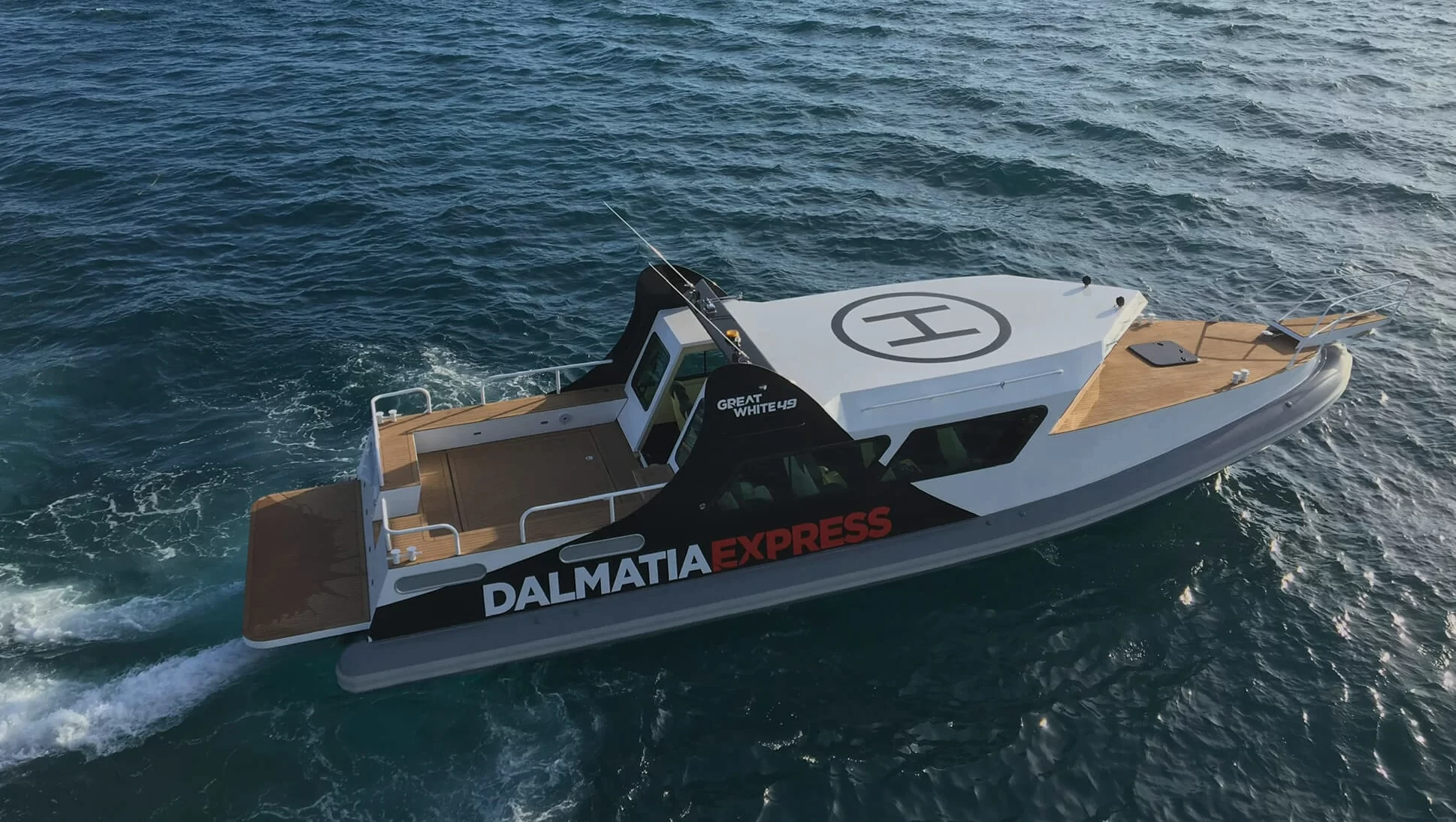
Naša flota je opremljena zatvorenim kabinama i radarom — Great White 49, 39, 35 i Lolivul 9. Ovi brodovi izgrađeni su za nastavak plovidbe po nemirnom moru, kada se javni katamarani zaustave. Vis se nalazi dalje na otvorenom moru od Hvara ili Brača. To je jedna od ruta najizloženijih buri i jugu (jakim sjevernim i južnim jadranskim vjetrovima). Kada se ti vjetrovi pojačaju, brzi katamarani se obično prvo otkazuju. Ljudi mogu ostati zaglavljeni dan ili više. Često još uvijek plovimo kada se to dogodi — zato nas ljudi obično biraju umjesto da čekaju otkazano jedrenje. Pošaljite nam poruku s datumima i veličinom grupe putem naša kontaktna stranica za fiksnu ponudu.
Nastavljamo prema Modroj špilji i gradu Visu protiv Komiže
Većina ljudi koji dođu na Vis također žele Modra špilja na susjednom Biševu. Vaša baza je važna. I trajekt za automobile i katamaran pristaju u gradu Visu, na istočnoj strani otoka. Do Komiže, na zapadnoj obali, može se doći autobusom, taksijem ili automobilom. Modra špilja nalazi se otprilike 6 nautičkih milja od Komiže. Brzi brodovi stižu do područja špilje (uvala Mezuporat) za otprilike petnaest minuta - znatno brže nego iz grada Visa. Ako vam je špilja prioritet, smjestite se u Komiži. Ako želite stari grad pogodan za šetnju, odaberite grad Vis. Naš vodič za braću i sestre Komiža ili grad Vis (2026.) detaljno objašnjava razlike.
Ulaz u špilju se naplaćuje zasebno, obično se plaća gotovinom u uvali Mezuporat. Prijavljene cijene uvelike variraju ovisno o izvoru i sezoni - otprilike 10–24 eura po odrasloj osobi - stoga provjerite trenutnu cijenu i ne vjerujte nijednoj pojedinačnoj brojci, uključujući i našu. Većina brodskih karata za Komižu ne uključuje ulaznicu. Svjetlo je najbolje u kasno jutro. Redovi u srpnju i kolovozu su dugi, stoga krenite što ranije. Prijelaz do Biševa je malim brodom, plovidba otvorenim vodama - jedna od prvih stvari koje se otkazuju za vjetrovitog dana. Naš Izlet u Plavu špilju koristi iste brodove sa zatvorenom kabinom i opremljene radarom, tako da često možemo prijeći i kada otvoreni brodovi ostanu u luci. Još uvijek se pitate isplati li se to učiniti? Vrijedi li posjetiti Plavu špilju (2026.) prvi.
Koju opciju zapravo trebaš odabrati?
Dolazak automobilom, fleksibilni datumi: uzmite trajekt Jadrolinije. Spor je, ali jeftin i pouzdan tijekom cijele godine. Putujete s malo prtljage, rado idete u jednom smjeru i prenoćite: Krilo vas vozi tamo za manje od 10 eura. Rad po zgusnutom rasporedu - izlet istog dana, let, grupa koja se ne želi dijeliti po redovima na trajektu: privatni taksi brod izgrađen je upravo za to. To je obično jedini način da se osigura da ste se vratili u Split kada trebate. Ista ideja vrijedi i za Split do Korčule, još jedan daleki otok gdje privatni prijelaz rješava probleme koje javni vozni red ne može.
Pošaljite poruku posadi putem naša kontaktna stranica s vašim datumima i veličinom grupe. Iskreno ćemo vam reći odgovara li vam privatni transfer ili će javni trajekt biti jednako dobar.
Posjetite otok Vis prije nego što krenete
Često postavljana pitanja: dolazak na otok Vis
Kako doći do otoka Visa iz Splita?
Samo morem — na Visu nema mosta ni zračne luke. Odaberite trajekt Jadrolinija (linija 602, ~140 min, prima vozila, tijekom cijele godine), katamaran Krilo za pješake (linija 9602, ~70–100 min, sezonski, obično jedna plovidba dnevno) ili privatni taksi brod (~65 min, prema vašem rasporedu, bilo koji datum).
Postoji li brzi brod ili katamaran od Splita do Visa?
Da — Krilo (Kapetan Luka) linija 9602, samo pješaci, preko Milne i grada Hvara. U vrhuncu sezone, Jadrolinija također vozi zaseban ljetni katamaran (linija 659) preko Bola i Hvara. Oba su sezonska — provjerite trenutni vozni red.
Možete li posjetiti otok Vis kao jednodnevni izlet iz Splita?
Pravi jednodnevni izlet moguć je samo usred ljeta, putem trajekta za automobile s ranim polaskom i kasnim povratkom ili katamaranom ljetne linije 659 - a čak je i tada dan dug. Izvan tih prozora pravi jednodnevni izlet nije moguć javnim brodovima. Privatni taksi brod omogućuje vam da sami odredite vrijeme povratka u bilo koje godišnje doba.
Koliko košta dolazak iz Splita do Visa?
Cijene javnih karata kreću se otprilike 7 do 10 eura po odrasloj osobi u jednom smjeru, plus 40 do 52 eura za standardni automobil na trajektu. Privatni taksi brod košta 460 do 1000 eura za cijeli brod, što je za grupu koja putuje razumna cijena po osobi.
Zašto je Vis bio tako dugo zatvoren za posjetitelje?
Bila je to utvrđena jugoslavenska vojna baza s više od trideset objekata, zatvorena za strane posjetitelje do 1989. godine. Ta izolacija je veliki dio razloga zašto je otok ostao nerazvijen i još uvijek se danas čini drugačijim od Hvara ili Brača.
Slijećete li u Vis ili Komižu?
I trajekt za automobile i katamaran pristaju u gradu Visu, na istočnoj strani otoka. Komiža, na zapadnoj obali, bolja je baza za Plavu špilju, budući da je puno kraća vožnja do Biševa. Privatni transfer može vas dovesti do bilo kojeg od njih.
Nakon što sletite, ljudi dolaze na Vis zbog tri stvari: vojnog obilaska otoka kroz tunele iz Hladnog rata, izleta u Plavu špilju iz Komiže i ronjenja s lokalnim ronilačkim centrima za istraživanje olupine B-17 (američkog bombardera iz Drugog svjetskog rata koji je potonuo kod Visa).
Za kotače nakon što sletite, Vis Rent uz obalni toranj u gradu Visu iznajmljuje skutere, električne bicikle i male automobile - rezervirajte unaprijed za srpanj i kolovoz.
Povezani vodiči
- Dnevni izlet na Modru špilju i Vis iz Splita — kako uklopiti Modru špilju i otok Vis u jedan dan.
- Korčula iz Splita — kako doći do Korčule, otoka s utvrđenim starim gradom, iz Splita.
- 7-dnevno putovanje s otoka na otok iz Splita — jednotjedna ruta za prelazak između otoka iz Splita.
Izvori i daljnje čitanje
- Jadrolinija — trajektna linija Split–Vis 602 (službena)
- Trajekti Krilo Fast Ferries — raspored plovidbe, linija 9602 (službeni)
- Turistička zajednica grada Visa — Modra špilja, službene informacije za posjetitelje
- Luka Split — polasci i pristaništa u stvarnom vremenu
 Croatian
  English
  Spanish
  French
  Russian
  German
  Italian
  Portuguese
  Arabic
  Norwegian
  Finnish
  Swedish
  Chinese
  Polish
  Dutch
Dutch