

New to this route? Start with our Split to Hvar ferry guide breaks down every option, operator and 2026 price in one place.
There are two situations the public timetable does not cover. The first is strong wind. A bura (a cold, gusty wind from the north) or a jugo (a warm, wet wind from the south) can stop the fast catamarans, while the car ferry still crosses, slowly. The second is the dead zone after the last Split–Hvar catamaran of the day, usually early evening. If your flight lands late, there is no public boat left. In both cases, a closed-cabin, radar-equipped private boat is usually still running. It is built for rough seas that cancel the fast ferries, and it leaves whenever you need it, not on a printed schedule.
We are not trying to scare you. Most days, the regular catamarans and the Split–Stari Grad car ferry work fine. They also cost much less than a private transfer, and we will tell you honestly when to just book the ferry. But maybe you have checked a ferry operator’s website at 7am, wondering if today’s crossing will run. Or maybe you have watched the last catamaran time pass while your suitcase was still on a delayed flight. If so, here is what actually happens next.
Travel time Split to Hvar Town
Why the fast catamaran cancels before the car ferry does
Table of Contents
- 1 Why the fast catamaran cancels before the car ferry does
- 2 Is a private transfer actually worth it? The honest math
- 3 Getting to Hvar when the ferries stop: reading a bura vs a jugo cancellation
- 4 Getting to Hvar when the ferries stop after the last catamaran of the day
- 5 Public options vs a private boat: cut-offs and weaknesses
- 6 Why our closed-cabin fleet still sails in moderate rough weather (and when it doesn’t)
- 7 Booking a private transfer for a rough-weather day or a late-night arrival
- 8 Frequently asked questions
- 8.1 Does the ferry to Hvar get cancelled in bad weather?
- 8.2 What time is the last ferry to Hvar from Split?
- 8.3 How do I know if it’s bura or jugo blowing?
- 8.4 How will I know if my ferry to Hvar is cancelled?
- 8.5 What can I do if my flight to Split lands after the last ferry to Hvar?
- 8.6 Is it safe to take a private boat to Hvar in rough seas?
- 8.7 Is the car ferry to Stari Grad a good backup if the Hvar Town catamaran is cancelled?
- 8.8 How much does a private boat transfer to Hvar cost compared with the ferry?
- 8.9 Related guides
- 9 Sources & further reading
The reason is physics, not company policy. The Split–Hvar Town catamarans (Jadrolinija line 641, Krilo/Kapetan Luka and TP Line) are light, fast passenger boats. They cross in 50–60 minutes. But a light hull moves a lot in waves on open water. The Split–Stari Grad car ferry (Jadrolinija line 635) is much heavier. It carries dozens of cars low in the water, so it stays steady in waves that would make a catamaran captain cancel. Stari Grad is the ferry port on the north side of Hvar island, about 20 km from Hvar Town. Simple rule: catamarans cancel first, car ferries cancel later, and only a rare, serious storm stops everything, including us.
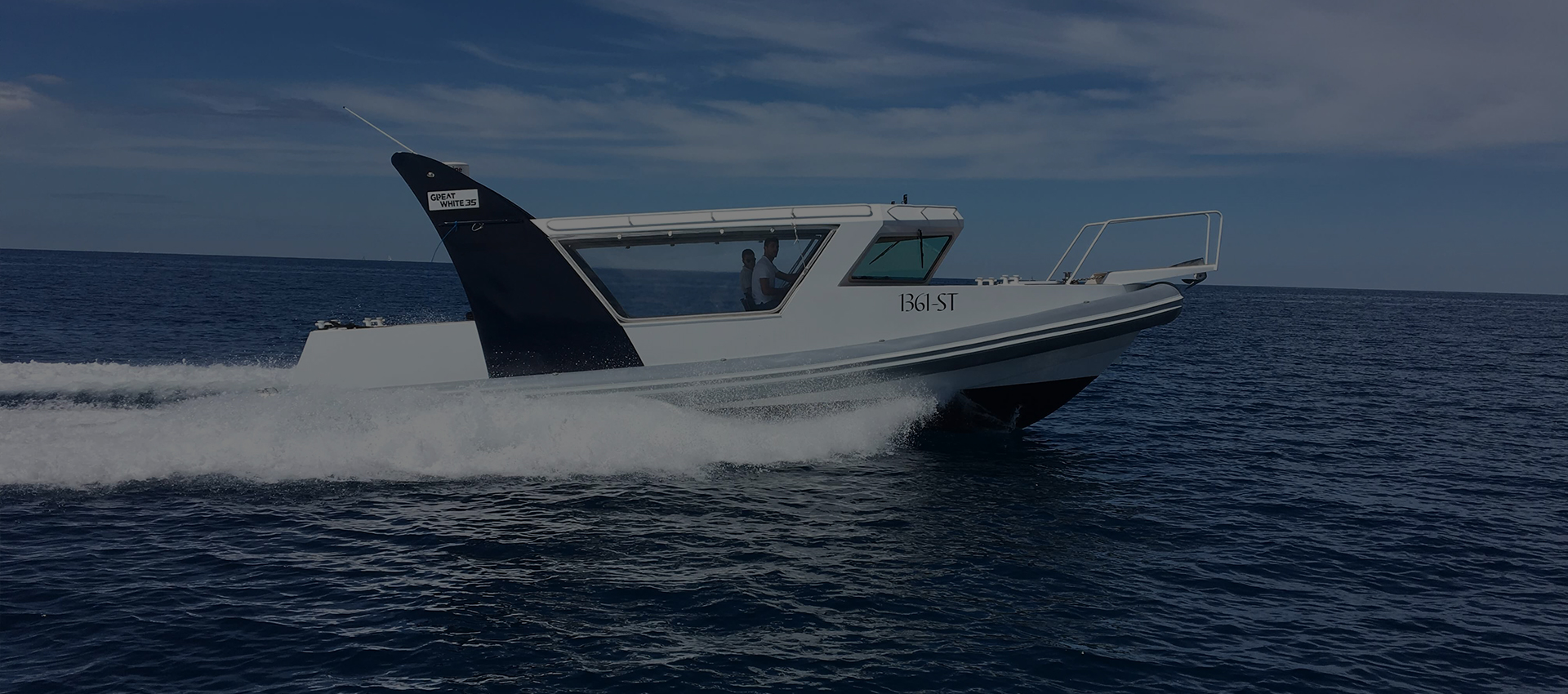
That’s exactly why our Split to Hvar water taxi is a real option on borderline days. Our boats (Great White 49, 39 and 35, and the Lolivul 9) have closed cabins and radar. They are built for sea conditions that stop a catamaran. Moderate bura waves or a rising jugo swell are usually still safe for us, even when the ferries are already cancelled for the day.
Is a private transfer actually worth it? The honest math
Take the worst realistic version of the “cheap” public route and compare it to our boat at its best — a full boat of 14 sharing one hull, Split Airport → Hvar Town.
| Public route (worst case) | Dalmatia Express | |
|---|---|---|
| Airport → Split ferry port | 4 taxis × ~€55 = ~€220 (+ night surcharge) | Included — we collect you |
| Boat | Catamaran €25 pp × 14 = €350 (peak) | One private boat ≈ €425 (whole boat) |
| Port → your accommodation | Extra taxi + luggage | Door-to-door |
| Waiting | 45–90 min early, fixed timetable, in the sun | Zero — we leave when you land |
| Money | ~€570 (≈ €41 pp) | ~€425 (≈ €30 pp) |
| Time | 4–8 h — find the city, the port, the dock, wait, then cross | 55 min, direct |
For a full boat you pay less per head than the “cheap” route — and arrive hours sooner, often half a day saved.
What else you get with Dalmatia Express
- Private — just your group. No strangers, no packed ferry deck.
- Met at the gate. Our driver takes your luggage, walks you to the boat, and the crew helps you off — door to door.
- Radar cabin, licensed crew. Safe in rough sea, and we sail when the catamarans are cancelled.
- 24/7, on demand. Book by call, SMS or WhatsApp — even mid-flight — and we are waiting when you land.
- The scenic route. Open sea, islands and hidden coves the whole way, not a crowded car deck.
- Concierge on board. Crew tips on the best beaches, konobas and what to see.
- Special rates on our tours. Transfer guests get preferential pricing on our Blue Cave and island excursions.
- Trusted names. Chosen by Mate Rimac and a James Bond production.
The part nobody tells you: the last catamaran to Hvar Town leaves around 19:15 in peak summer. Land after that — a delayed or late-night flight — and there is no public boat until morning: a Split hotel night (€100–180) plus next-day tickets, or hours at the port. Our closed-cabin boats run 24/7 and still sail in a bura when the catamarans cancel.
Skipper’s tip: 4+ people with luggage, or any flight landing after about 18:00: the private boat usually costs less in total once you add taxis, tickets and a possible hotel night. It always wins on time.
See our Split → Hvar prices, or tell us your flight time — we reply 24/7.
Getting to Hvar when the ferries stop: reading a bura vs a jugo cancellation
Bura is a cold, dry wind from the northeast, blowing from the land. It can grow from a light breeze to storm strength in under an hour. But it usually ends within a day or two. Jugo is a warm, wet wind from the southeast, blowing from the sea. It builds slowly and can sit over the Adriatic for days. It makes bigger waves, and the Hvar channel becomes uncomfortable for small boats. A bura cancellation is often a one-day problem. A jugo can mean several difficult days in a row. So leave spare time in your plans in autumn and spring.
Skipper’s tip: Check the wind direction on windy.com or meteo.hr (the Croatian weather service) before you travel. Arrows from the NE mean bura. Arrows from the SE mean jugo. Ferry companies usually know about 24 hours before a serious storm. But not every company sends an SMS when a sailing is cancelled. If the forecast looks uncertain, call the ferry desk that morning.
If your sailing is cancelled, our guide on Croatia ferry cancellations and backup plans explains what to do, step by step, for every island.
Getting to Hvar when the ferries stop after the last catamaran of the day
The second gap is simpler: it is the clock. In summer the catamarans run many times a day, but they stop long before midnight. The last departure from Split is around 19:15 in high summer. Off-season it can be mid-afternoon. Once that boat has gone, you have two public options. One is the car ferry to Stari Grad (a 20–35 minute drive from Hvar Town), if a sailing is still left. The other is nothing until morning.
A late flight is the biggest problem here. The Split Airport shuttle bus leaves about 30 minutes after each arrival, but the last one is usually around 23:00. After that, only a few local buses run, and they go into Split city, not to the island. If your flight lands late, or the last boat has gone while you finish dinner on the Riva (the seafront promenade in Split), the honest public-transport answer is “wait until morning.” Our Split Airport to Hvar transfer runs from the airport gate to the dock at your real landing time. The driver tracks your flight and waits if it is delayed.
Public options vs a private boat: cut-offs and weaknesses
Here is how the realistic ways to Hvar compare. We look at weather and time, not just price.
| Option | Typical time | Typical cost | Cuts off / weak point |
|---|---|---|---|
| Fast catamaran (Jadrolinija 641, Krilo/Kapetan Luka) | 50–60 min | ~€10–30/person one-way | First cancelled in bura/jugo; last sailing early evening (mid-afternoon off-season) |
| Car ferry to Stari Grad (Jadrolinija 635) + taxi/bus | ~1h50–2h crossing + 20–35 min drive | ~€41.50–56 one-way incl. car | Runs later and in worse weather, but stops in severe storms; car slots need booking ahead in summer |
| Airport shuttle bus + ferry combo | 3–4+ hours door to door | Low, per person | Last shuttle ~23:00; sparse night buses only after; no route onto the island once ferries stop |
| Private taxi boat (Dalmatia Express) | ~55 min, direct | €370–900 per boat from Split; €400–900 with Split Airport pickup (fair price for groups of 4–10) | 24/7, on your schedule; door-to-door; sails when catamarans cancel; only an extreme storm stops us too |
The private boat is not the cheapest option for two people on a calm morning. It is the only option that works around wind and the clock. Check the Split to Hvar taxi boat page for a fixed price for your group.
Every public option has a hard limit: a wind speed or a clock time. A private boat works around both. This is not a criticism of the ferries. For a calm mid-morning crossing, the catamaran is the smarter and cheaper choice. The gap shows up in the difficult cases.
Why our closed-cabin fleet still sails in moderate rough weather (and when it doesn’t)
Honesty matters more than marketing here. Our boats run when the fast catamarans are already cancelled. The reason is the design: strong hulls, radar and closed cabins. They are built for the middle band of weather, such as moderate bura waves or a rising jugo swell. That weather is unsafe for a light passenger catamaran. It is manageable for a heavier, closed boat with a local skipper who knows this water. Shock-absorbing seats and a sealed cabin also make the ride much more comfortable.
We will not pretend this is true in every condition. In a real storm, gale-force winds, or a port closure, we stop too. Safety comes first, with no exceptions. We give you a longer travel window. We do not remove the weather.
Skipper’s tip: If a real storm is forecast, do not try to beat it with any boat, ours included. Plan a spare night instead. Most bura winds end within 24–48 hours. A jugo can cost you several days, so add extra time to your plan if you travel between October and April.
Booking a private transfer for a rough-weather day or a late-night arrival
The process is the same for a bad forecast two days ahead or a flight delayed by three hours. Message us with your dates, flight number and group size. We usually confirm the timing within minutes. For airport pickups, our driver waits at the exit, however late the flight lands. For a departure from Split city, we leave from the Riva at any hour you choose. Go to our contact page, tell the crew what you need, and you get a fixed quote.
See Hvar Town before you go
Frequently asked questions
Does the ferry to Hvar get cancelled in bad weather?
Yes. The fast catamarans (Jadrolinija line 641, Krilo/Kapetan Luka, TP Line) are cancelled first when bura or jugo winds grow, because their light hulls handle rough water badly. The larger Split–Stari Grad car ferry is more resistant to weather. It usually keeps running in conditions that stop the catamaran, but it also stops in severe storms.
What time is the last ferry to Hvar from Split?
It depends on the season. In high summer the last catamaran from Split to Hvar Town leaves around 19:15 (TP Line). Krilo’s last summer departure is around 18:00. Off-season the last boat can leave in mid-afternoon. Always check the operator’s current timetable for your travel date.
How do I know if it’s bura or jugo blowing?
Check the wind direction on windy.com or meteo.hr. Bura blows from the northeast. It is cold and dry, with sudden gusts, and it clears within a day or two. Jugo blows from the southeast. It is warm and wet, builds slowly, and lasts for days with bigger waves. Both stop the catamaran. Jugo causes longer disruptions.
How will I know if my ferry to Hvar is cancelled?
Some operators tell ticket holders by SMS or email, but not every company does this. If the forecast looks uncertain, check the operator’s website or call their desk on the morning of travel.
What can I do if my flight to Split lands after the last ferry to Hvar?
Your options become very limited. The airport shuttle bus runs until about 23:00. After that, only a few local buses go into Split city, not to the island. Our Split Airport to Hvar transfer tracks your flight and leaves whenever you land.
Is it safe to take a private boat to Hvar in rough seas?
Our closed-cabin boats with radar handle sea conditions that stop the public catamarans. Our skippers sail this water every day. But we do not sail in real storms. If the harbourmaster closes the port, we stop too.
Is the car ferry to Stari Grad a good backup if the Hvar Town catamaran is cancelled?
Often, yes. It handles bad weather better. The trade-off is a longer crossing (about 1h50–2h) plus a 20–35 minute drive or bus ride into Hvar Town. In summer, tickets for cars sell out, so book ahead.
How much does a private boat transfer to Hvar cost compared with the ferry?
A public catamaran ticket costs about €10–30 per person one-way. A private closed-cabin transfer from Split costs €370–900 for the whole boat, for any group size. It is the only option once the ferries have stopped because of weather or the time of day.

Related guides
- Split to Hvar: ferry, catamaran or speedboat — compares the passenger catamaran, car ferry, and speedboat options.
- Where to stay on Hvar — how to pick a base on Hvar island, from Hvar Town to quieter villages.
- Stari Grad or Hvar Town? — helps you choose which Hvar port town suits your trip.
Sources & further reading
- Jadrolinija — Split-Hvar catamaran line 641
- Jadrolinija — Split-Stari Grad car ferry line 635
- Krilo Fast Ferries — Split-Hvar sailing schedule
- Croatia Ferries — Service status and weather forecast
- Split Airport — flights and transport
 English
 Croatian
 Spanish
 French
 Russian
 German
 Italian
 Portuguese
 Arabic
 Norwegian
 Finnish
 Swedish
 Chinese
 Polish
 Dutch