

Resposta curta: escolha Cidade de Hvar Se você busca vida noturna, restaurantes sofisticados e um porto para catamarãs ao lado do seu hotel, escolha a opção ideal. Stari Grad Se você busca uma base mais tranquila, plana e econômica, com um porto para balsas e opções fáceis de passeios de um dia, Hvar é a escolha ideal. Essa é uma pergunta frequente. As duas cidades ficam a apenas 20 km de distância, na mesma ilha, mas proporcionam férias completamente diferentes. Hvar é uma cidade turística glamorosa, repleta de iates e bares de coquetéis. Stari Grad, por sua vez, é uma cidade agrícola com 2.400 anos de história e também possui um porto.

Hvar Town x Stari Grad em poucas palavras
Índice
- 1 Hvar Town x Stari Grad em poucas palavras
- 2 Vibração e ritmo diário
- 3 Como chegar a Stari Grad ou à cidade de Hvar partindo de Split
- 4 Stari Grad ou Hvar Town: tabela comparativa completa
- 5 Quem deve escolher a cidade de Hvar?
- 6 Quem deve escolher a Stari Grad?
- 7 A resposta mais simples: divida sua estadia.
- 8 FAQ: Stari Grad ou Cidade de Hvar
- 8.1 Stari Grad ou a cidade de Hvar: qual é a melhor opção para quem visita a cidade pela primeira vez?
- 8.2 Qual a distância entre Stari Grad e a cidade de Hvar?
- 8.3 Qual cidade possui um terminal de balsas para carros?
- 8.4 A cidade de Hvar fica muito cheia no verão?
- 8.5 Vale a pena se hospedar em Stari Grad, ou é apenas um passeio de um dia?
- 8.6 Posso me hospedar em uma cidade e fazer um bate-volta para a outra?
- 8.7 É mais barato ficar em Stari Grad do que na cidade de Hvar?
- 8.8 Qual é a maneira mais rápida de chegar de Split a qualquer uma das cidades?
- 8.9 Guias relacionados
- 9 Fontes e leituras adicionais
A cidade de Hvar fica situada em duas colinas ao redor de um porto em forma de ferradura, repleto de iates, bares de coquetéis e um arsenal do século XVI (o antigo edifício naval na orla do porto). É uma ótima opção se você quiser sair do hotel e entrar direto na agitação. Mas as ruas são estreitas e íngremes. Para chegar à Fortica (a fortaleza no topo da colina acima da cidade), você sobe cerca de 180 degraus.

Stari Grad is older than Hvar Town — in fact, it is one of the oldest continuously inhabited towns in Europe. It sits flat around a sheltered bay. Instead of yachts and cocktail bars, you get stone lanes, family-run konobas (traditional Dalmatian taverns), and a UNESCO-listed farming plain right behind the town.
Neither town is “better”. The question is what kind of holiday you want.
Dica do capitão: clients ask us this every week. If this is your first visit to Hvar, read the whole comparison before you book. The obvious choice is Hvar Town, because it is famous. But it is not right for everyone.
Vibração e ritmo diário
Hvar Town has a clear evening routine in high season. Sunset drinks start around 18:30. Dinner starts around 21:00. Then the harbour bars stay busy into the small hours. In July and August, an estimated 20,000 visitors are on the island each day — that’s nearly double the roughly 11,000 people who live there. So the main square is very crowded from late July into early August.
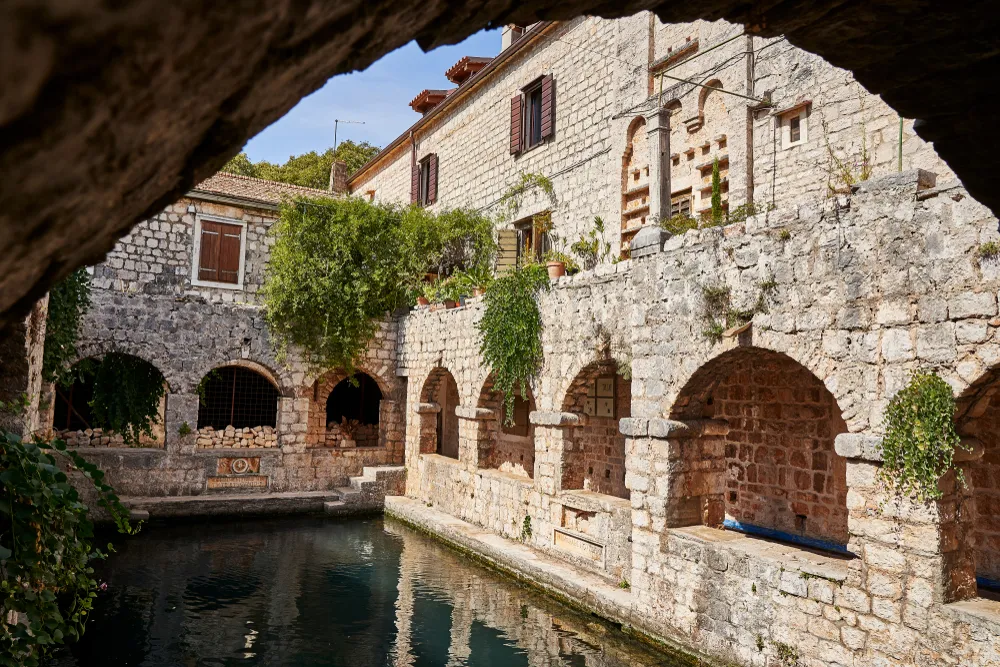
A orla de Stari Grad permanece ensolarada até pouco antes do pôr do sol e é bem mais tranquila, mesmo na alta temporada. É um ótimo lugar para tomar um drinque antes do jantar. Você também pode caminhar até o Tvrdalj (a casa fortificada do poeta Petar Hektorović, do século XVI, com um lago que ainda abriga peixes), ir dormir cedo e depois pedalar até a planície de Stari Grad, Patrimônio Mundial da UNESCO — cultivada da mesma forma desde os tempos dos gregos, há cerca de 2.400 anos.
Como chegar a Stari Grad ou à cidade de Hvar partindo de Split
Cada cidade tem seu próprio porto, então a forma como você viaja influencia o local onde você desembarca.
O catamarã (A linha 641 da Jadrolinija, de 1 de maio a 11 de outubro de 2026, mais a linha Krilo/Kapetan Luka, aproximadamente de 20 de março a 15 de novembro) leva os passageiros a pé diretamente ao porto da cidade de Hvar. A travessia dura cerca de uma hora (55 a 65 minutos), com até 19 a 20 viagens por dia na alta temporada. As tarifas variam entre € 10 e € 30 por trecho.
O balsa para carros A única maneira de levar um veículo para Hvar é de trem (linha 635 da Jadrolinija). Ele chega em Stari Grad após cerca de 1h50 a 2h. Na alta temporada, o custo total é de aproximadamente € 56 para um adulto com carro; na baixa temporada, o valor é mais próximo de € 41,50. Sua passagem também reserva o lugar do seu carro a bordo.
A barco particular Pode atracar onde lhe for mais conveniente, em cerca de 55 minutos, e continua a funcionar mesmo quando o vento impede a circulação dos catamarãs. O nosso Táxi aquático de Split para Hvar Operamos esta rota todos os dias, independentemente da previsão do tempo. Para obter informações completas sobre navegação — todas as operadoras, datas da temporada e como as linhas se conectam — consulte nosso [link/referência]. Guia de ferry de Split para Hvar.
| Opção | Tempo | Agendar | Preço |
|---|---|---|---|
| Táxi aquático particular (Dalmatia Express) | Aproximadamente 55 minutos, de porta a porta. | Disponível 24 horas por dia, 7 dias por semana, de acordo com sua programação; navega quando os catamarãs cancelam; serviço de busca no Aeroporto de Split disponível. | €370–900 por barco (preço justo para grupos de 4 a 10 pessoas) |
| Catamarã | 55 a 65 minutos até o porto da cidade de Hvar | Horário fixo, sazonal | €10–30 por pessoa |
| Balsa para carros | 1h50–2h, para Stari Grad | Horário fixo, durante todo o ano. | Aproximadamente €56 para um adulto + carro (em períodos de alta temporada) |
Um barco-táxi particular é a única opção que opera todos os dias, a qualquer hora, e que busca você exatamente onde você estiver — inclusive no Aeroporto de Split. Reserve seu táxi aquático de Split para Hvar..
Tempo de viagem a partir de Split
Na própria ilha, as duas cidades ficam a cerca de 20 km de distância uma da outra — 20 a 30 minutos de carro ou cerca de 20 minutos de ônibus local.
Stari Grad ou Hvar Town: tabela comparativa completa
| Fator | Cidade de Hvar | Stari Grad |
|---|---|---|
| Vibração | Glamoroso, social, construído em duas colinas com ruas estreitas e escadarias. | Ruas planas, tranquilas e históricas ao redor de uma baía abrigada. |
| vida noturna | Bares de praia, bares de coquetéis no porto, baladas que ficam abertas até tarde; realmente animado. | Relaxed konoba terraces and a quiet riva; quiet by midnight |
| Como chegar lá | Catamarã direto para o porto, a 50-60 minutos de Split; ou um barco-táxi particular a qualquer hora. | Balsa para carros, aproximadamente 1h50 a 2h de Split; ou ônibus/táxi, 20 a 30 minutos da cidade de Hvar. |
| Custo | As tarifas da alta temporada sobem acentuadamente; os preços disparam de 30 a 50% em julho e agosto. | Uma das bases mais econômicas da ilha. |
| Ideal para | Casais e grupos que procuram vida noturna, restaurantes sofisticados e um ambiente social sem carros. | Famílias, estadias mais longas, motoristas/ciclistas, qualquer pessoa que queira desfrutar de Hvar sem as multidões. |
Se você está avaliando datas e tamanho do grupo, envie-nos uma mensagem com o período da sua viagem e quantas pessoas irão viajar. Diremos honestamente se um catamarã compartilhado, a balsa para carros ou uma travessia privada é a melhor opção para a sua viagem. É isso que a [nome da empresa/organização] oferece. página de contato é para.
Quem deve escolher a cidade de Hvar?
Choose Hvar Town if a lively evening matters to you: cocktails with a harbour view, a short walk to dinner, and bars open past midnight. It also suits travellers without a car, since the catamaran lands you exactly where you’re staying. Think about the steps, though. Much of the accommodation sits up hillside lanes, and summer heat, heavy luggage and more than 100 stairs are hard together. Budget for peak pricing too; rates here run well above the island average in July and August.
Quem deve escolher a Stari Grad?
Escolha Stari Grad se quiser desfrutar da história e das paisagens de Hvar sem as multidões e os preços elevados. É também ideal para famílias, estadias mais longas e para quem viaja de carro ou bicicleta. A cidade é plana e fácil de explorar a pé. As praias próximas são perfeitas para crianças pequenas: Bonj é rasa e ideal para famílias, e Brizenica é uma enseada mais tranquila e sombreada por pinheiros. Stari Grad também fica perto de Vrboska e Jelsa, facilitando passeios de um dia. Guia Vrboska Inclui a cidade canalizada, às vezes chamada de "Pequena Veneza", caso você planeje se hospedar por lá.
Dica do capitão: staying in Hvar Town but travelling with a car? You don’t have to bring it all the way there. Many of our clients leave their car in Split and cross by private boat, straight into Hvar Town harbour. You avoid the car-ferry queue and the long coastal drive. It often costs about the same as a taxi from the ferry port.
A resposta mais simples: divida sua estadia.
Because the two towns are only about 20 minutes apart, you don’t have to choose just one for your whole trip. A popular plan is three or four nights in Stari Grad as a calm base for day trips to Vrboska and Jelsa, then two or three nights in Hvar Town for the harbour scene and nightlife. This also makes the transfer easy: arrive by car ferry into Stari Grad, cross by bus or a short private boat ride, then leave from Hvar Town by catamaran. Our Guia Split para Stari Grad aborda essa travessia em detalhes, e o nosso Guia de hospedagem em Hvar Compara ambas as cidades com as outras bases da ilha. Entre em contato Informe as datas desejadas e nós ajudaremos a planejar os traslados.
FAQ: Stari Grad ou Cidade de Hvar
Stari Grad ou a cidade de Hvar: qual é a melhor opção para quem visita a cidade pela primeira vez?
It depends on what you want. First-time visitors who want the classic picture of Hvar — harbour bars, boutique shops, a lively evening — usually do better in Hvar Town. Visitors who want to relax, explore by car or bike, and pay less usually prefer Stari Grad.
Qual a distância entre Stari Grad e a cidade de Hvar?
Aproximadamente 20 km — cerca de 20 a 30 minutos de carro ou cerca de 20 minutos de ônibus local. Um táxi aquático particular também pode fazer a travessia direta entre os dois portos em menos de uma hora.
Qual cidade possui um terminal de balsas para carros?
Stari Grad. O ferry para carros da Jadrolinija (linha 635) é a única maneira de levar um veículo de Split para Hvar. Se você não tiver carro, o catamarã rápido faz a travessia diretamente para o porto da cidade de Hvar.
A cidade de Hvar fica muito cheia no verão?
Sim, no final de julho e na primeira quinzena de agosto. A praça principal e a orla ficam realmente movimentadas — a ilha recebe muito mais visitantes diários do que residentes nessa época. Os meses de transição (maio, junho e setembro) são bem mais tranquilos.
Vale a pena se hospedar em Stari Grad, ou é apenas um passeio de um dia?
Vale a pena ficar por lá, não apenas visitar por um dia. Entre a planície listada como Patrimônio Mundial da UNESCO, o rio Tvrdalj, a boa comida local e as praias mais tranquilas para famílias, de três a cinco noites lhe dão tempo para fazer passeios de um dia para a cidade de Hvar, Vrboska e Jelsa sem pressa.
Posso me hospedar em uma cidade e fazer um bate-volta para a outra?
Sim, sem problemas — este é um dos métodos de transporte mais comuns na ilha. O ônibus, um táxi ou um curto trajeto de barco particular percorrem os 20 km em bem menos de meia hora. Funciona bem até mesmo com crianças pequenas.
É mais barato ficar em Stari Grad do que na cidade de Hvar?
Em geral, sim. Stari Grad é consistentemente uma das bases mais econômicas da ilha. As tarifas da cidade de Hvar sobem bastante na alta temporada, em julho e agosto.
Qual é a maneira mais rápida de chegar de Split a qualquer uma das cidades?
Um táxi aquático privado é a opção mais rápida, levando cerca de 55 minutos, de acordo com o seu próprio horário. Para transporte programado, o catamarã para a cidade de Hvar (50 a 60 minutos) é mais rápido que a balsa para Stari Grad (cerca de 1h50 a 2h) — embora você precise da balsa se estiver levando um veículo. Veja nosso Opções de transferência de Split para Hvar Para obter a análise completa.

A questão de onde se hospedar resume bem as duas cidades: a cidade de Hvar abriga o Palace Elisabeth, um hotel histórico na praça principal; já Stari Grad tem o Maslina Resort, um refúgio cinco estrelas na baía de Maslinica.
Para jantar em Stari Grad, o Antika, nas ruelas antigas, é uma instituição local — parte bistrô, parte bar de coquetéis.
Guias relacionados
- De Split para Hvar: ferry, catamarã ou lancha. — compara as opções de catamarã de passageiros, balsa para carros e lancha rápida.
- Dividir para Jelsa — todas as formas de viajar de Split para Jelsa, uma pequena cidade portuária em Hvar.
- Guia das Ilhas Pakleni — um pequeno grupo de ilhas perto da cidade de Hvar, ideal para um dia de praia.
Fontes e leituras adicionais
- Jadrolinija — Split–Stari Grad linha 635 de ferry, horários e preços
- Jadrolinija — Linha 641 do catamarã Split-Hvar Town
- Centro do Patrimônio Mundial da UNESCO — Planície de Stari Grad
- Krilo Fast Ferries — Horário de viagens Split–Hvar
 Portuguese
  English
  Croatian
  Spanish
  French
  Russian
  German
  Italian
  Arabic
  Norwegian
  Finnish
  Swedish
  Chinese
  Polish
  Dutch
Dutch